
Brighton Stitch: finding inspiration in reclaimed textiles
As part of our Summer Stash Reset, we're excited to introduce one of our fantastic collaborators, Brighton Stitch.
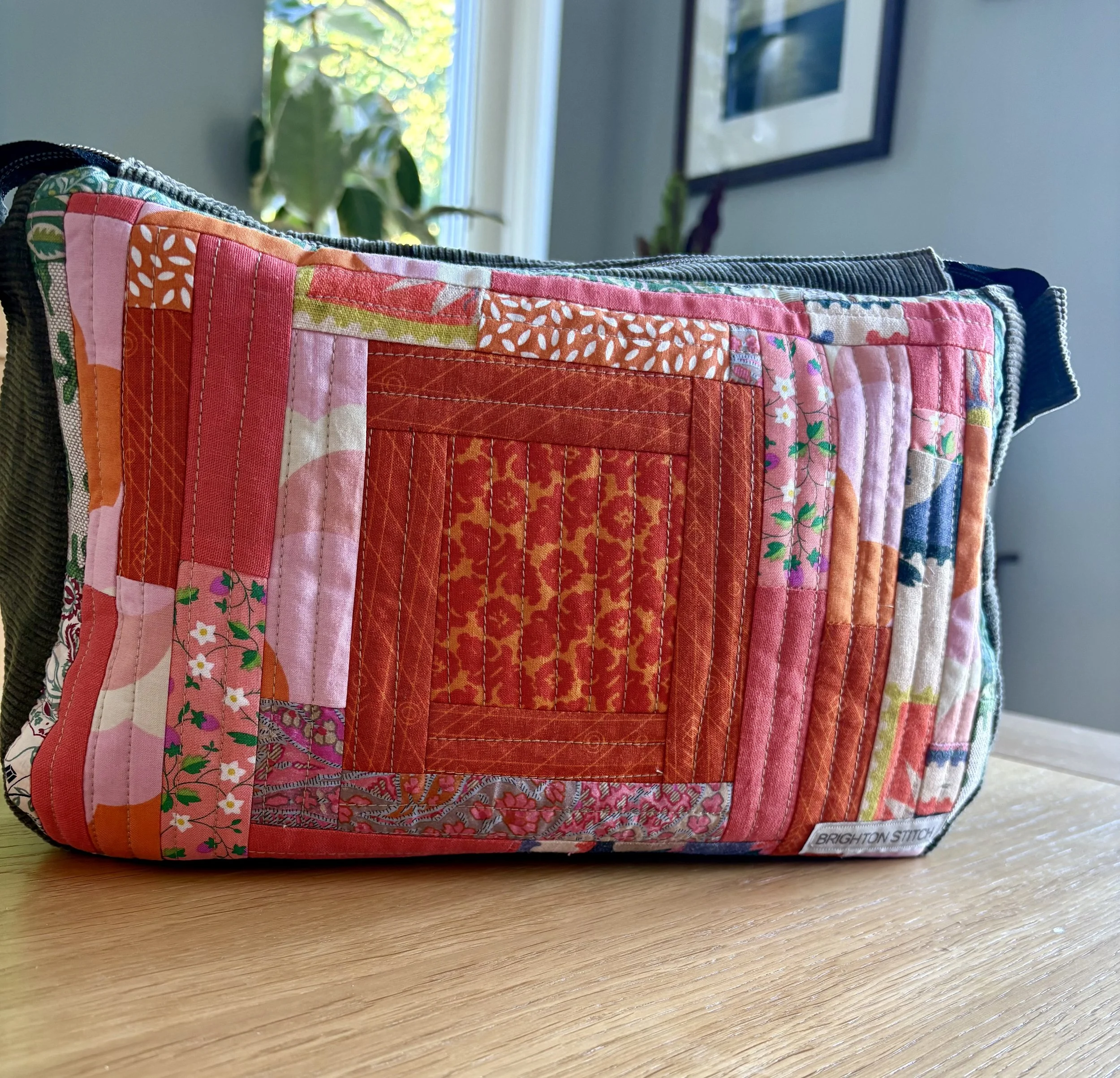
Behind this small maker-led business based in Brighton is Lindsay Brown. Lindsay creates bags and accessories in small batches using repurposed textiles, reclaimed fabrics and carefully sourced natural fibres. Her aim is to make practical, beautifully made pieces that encourage people to value craftsmanship and thoughtful reuse.

We spoke to Lindsay about the treasures in her stash, where she sources materials, and her ethos.
Here are her thoughts, in her own words.
What inspired you to start creating with repurposed fabrics?
I didn’t set out to build a business around repurposed textiles. At first, I just wanted to spend less screen time and follow what I genuinely loved. It all started with a small pouch I made from leftover fabric scraps. Friends quickly asked if I could make one for them too.

The first small pouch That Lindsay made.
At the same time, years of sewing had made me increasingly aware of just how much perfectly good fabric goes unused or thrown away. I’ve always been drawn to beautiful textiles and the stories they carry. I don’t see remnants as leftovers, but as the start of something new. Designing around what already exists pushes me to be more creative, with every piece of fabric bringing its own character, history and limitations. I believe good materials deserve more than one life, so I spend my time turning overlooked textiles into practical, thoughtfully made bags and accessories that people will enjoy using.
Where do you find the materials you work with?
I source materials from all sorts of places, which is part of the joy of the process. I love the circularity of charity shops and I also like a rummage in the remnant section at the shops. Whenever I’m at our house in rural France, I never miss the chance to explore local flea and vintage markets. I also keep an eye on Vinted and Destasher for beautiful natural fabrics. I enjoy mixing old and new and giving textiles a fresh purpose, whether that’s turning a jute stair runner into a shopping tote or pairing reclaimed fabrics with fresh linen.


More often than not, I buy a piece of fabric simply because I love it. Only later do I decide what it wants to become. That instinct goes back to my first career as a fashion merchandiser at Hobbs, where one of my favourite jobs was selecting bolts of fabric for designer Marilyn Anselm as she developed the next season’s collection. Today, I still feel the same excitement when I discover fabric with a story waiting to be continued, whether I find it in Brighton or bring it home from travels in France, Italy, Spain, Peru or New Zealand.
Do you have a favourite piece of fabric you've rescued over the years?
My favourite rescued textile isn’t something I found in a vintage market, it’s a faded patchwork quilt that was passed down from my great-grandmother. It bears the marks of a well-loved life with worn patches I’ve carefully repaired. It has beautiful hand stitching and fabrics that tell the story of another generation. I think it’s one of those pieces you can’t help but hold for a while before putting it away.

Lindsay’s patchwork quilt passed down by her great-grand mother.
I’m still undecided whether to transform it into bags and accessories or preserve it as it is. Every section would create a completely unique piece, but once it’s cut, there’s no going back. That dilemma perfectly sums up how I feel about working with vintage textiles. They already have a story, and my role is to honour that history, whether by preserving it or thoughtfully giving it a new life.
What does your stash look like? Any tips to keep it from becoming overwhelming?
Like most of us, I have a healthy stash, although I prefer to think of it as a carefully curated library. Over the years, I’ve become much more selective about what I bring home, choosing natural fibres, beautiful textures and colours that fit my aesthetic. If I can’t imagine using a fabric within the next year or two, I’ll sell it or donate it so someone else can give it a new life.
Keeping everything organised is just as important as collecting it. I catalogue my fabrics in the Stash Hub app and store them by type and colour, so I can easily see what I have and avoid buying duplicates.


I’ve learnt that a stash should inspire creativity, not create guilt. I’d much rather have a smaller collection of fabrics than I genuinely love than cupboards full of bargains I’ll never use.
(top tip : If you see a bargain, ask yourself: Would I buy this if it was full price?)
What's one material you can never resist bringing home?
Linen! Every single time.
I tell myself I have enough, then I spot another beautiful piece of washed linen and somehow it comes home with me. I love how it softens with use, how it ages gracefully, and how it suits the simple, understated styles I like to make.
What's the most unusual material you've transformed into something beautiful?
Probably a jersey satin dress fabric from Croft Mill. I'd bought it to practise sewing yoga leggings, but when it arrived it was all wrong, much heavier than expected with a sheen that looked like faux leather. I had an immediate mental image of Rod Stewart and knew the leggings we NOT happening!
The fabric sat in my stash until I realised it would make a beautiful bias-cut midi skirt instead.

Lindsay’s midi skirt.
It drapes perfectly and looks just like soft faux leather. It's now one of my favourite winter pieces, proof that sometimes the fabric has better ideas than I do.
What are you working on at the moment?
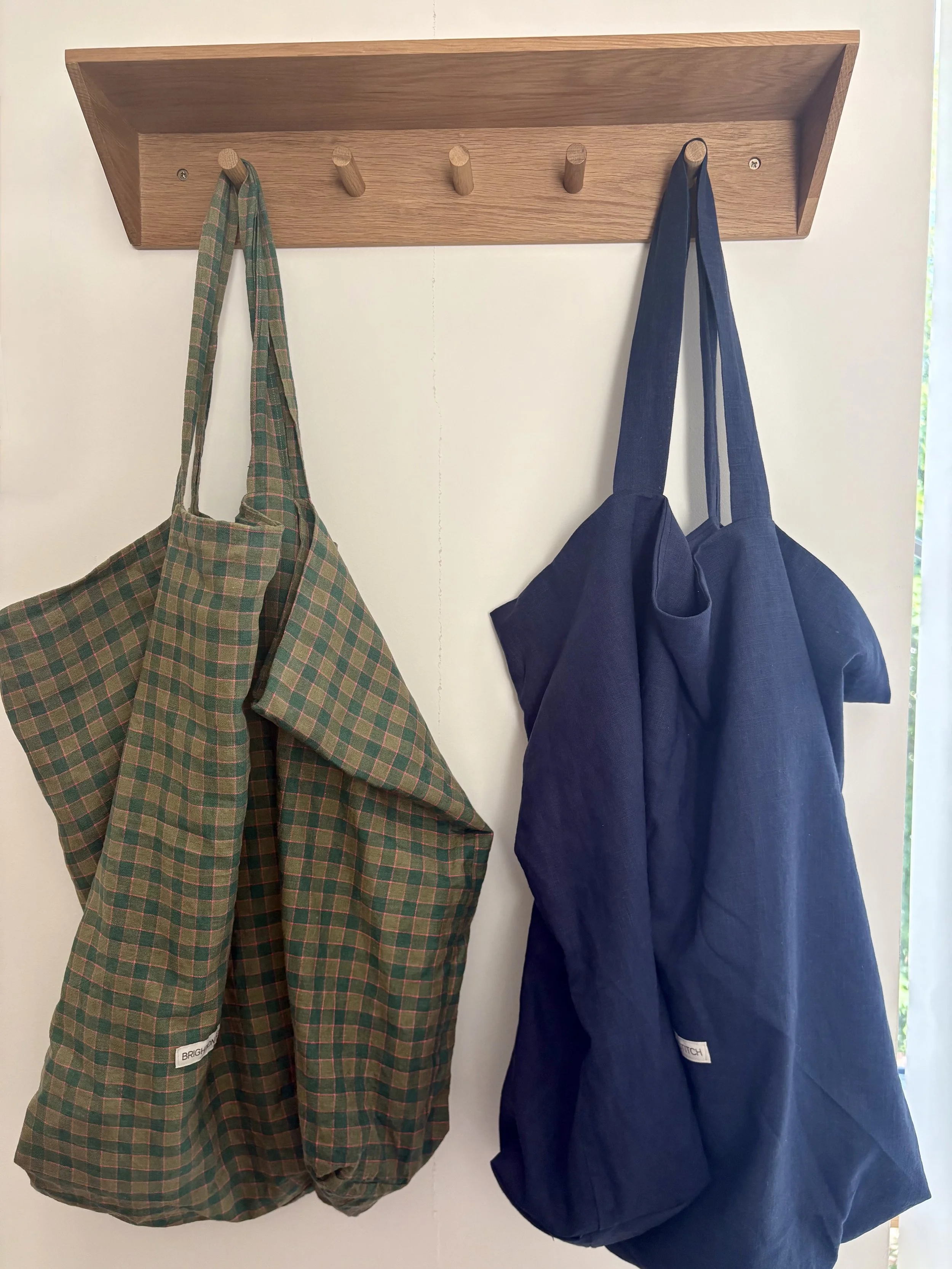
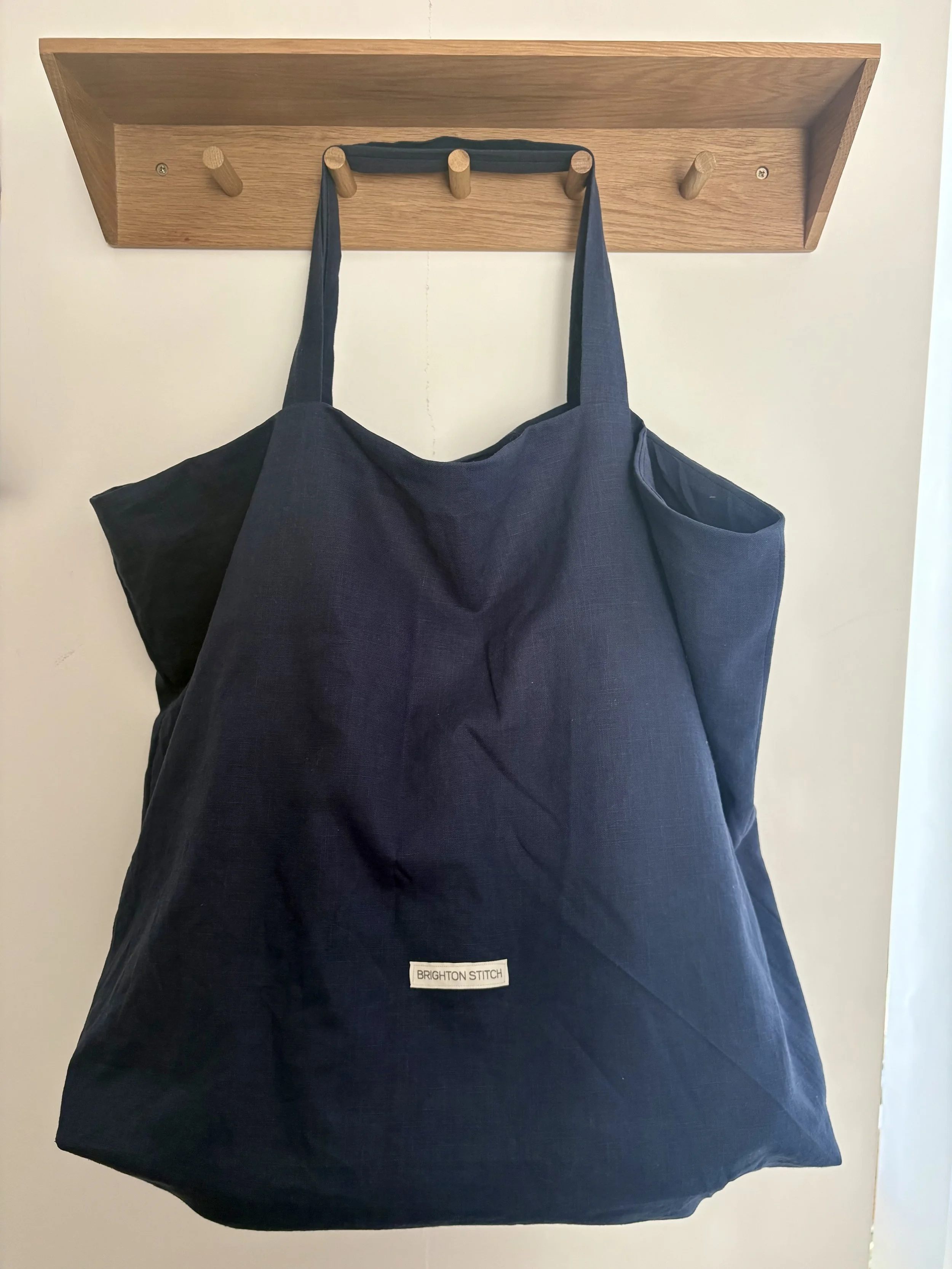
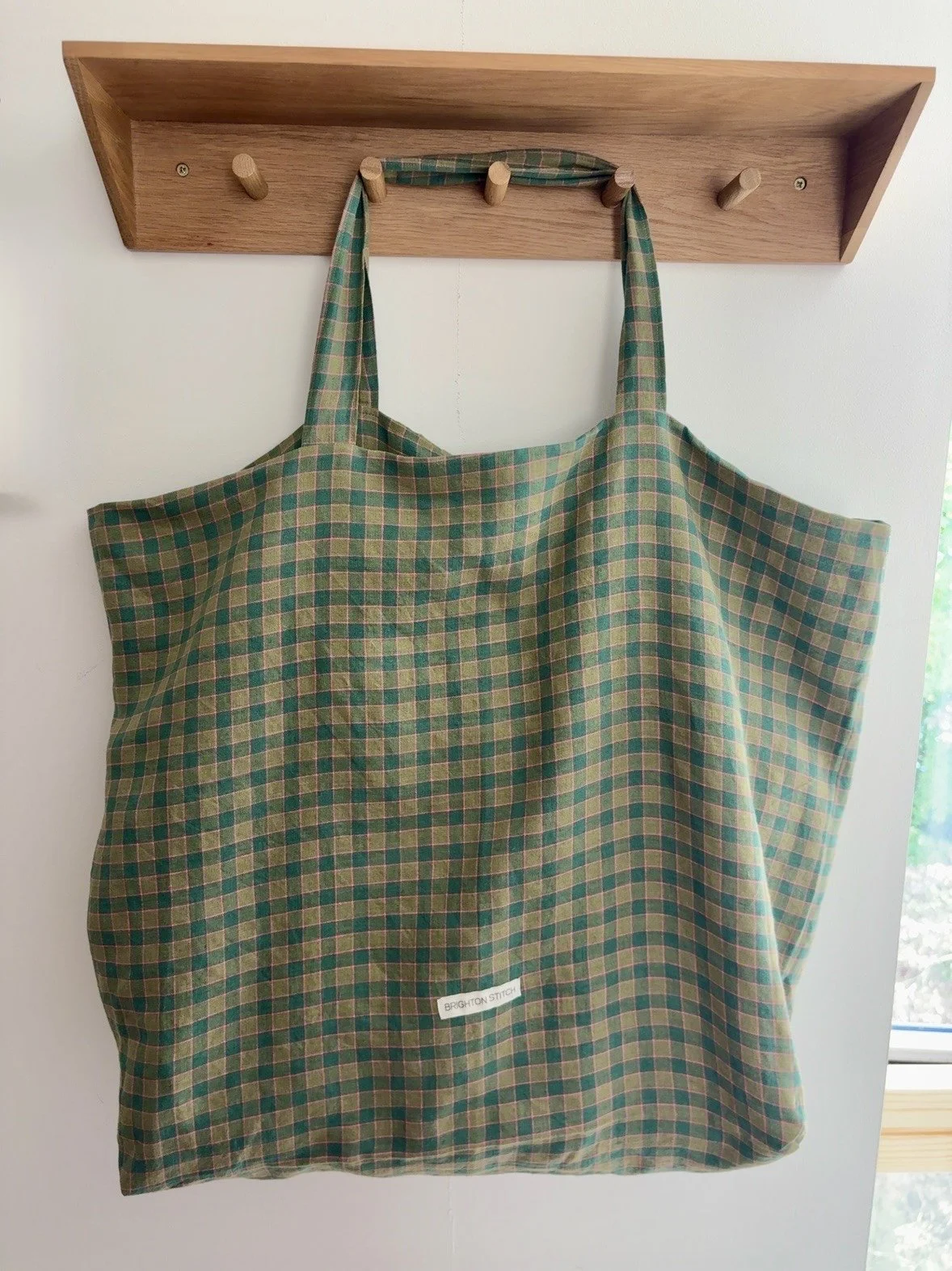
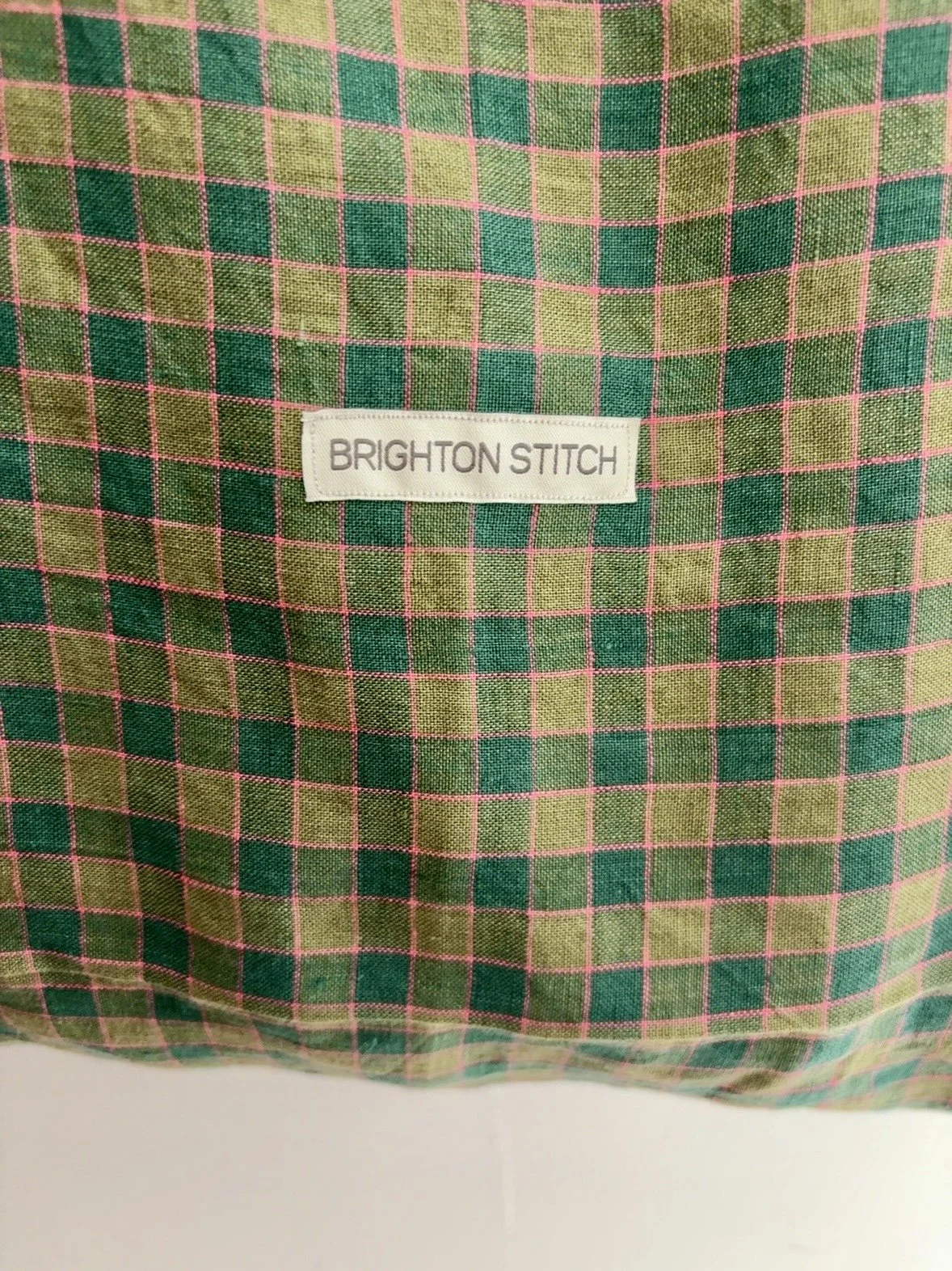
At the moment I'm working on expanding the oversized reversible linen tote bags, made from laundered European linen and named after places in Sussex. They're becoming very popular, combining practical design with timeless, natural materials.
I'm also excited to start a new collection using vintage tapestries, transforming them into one-of-a-kind handbags.
How has working with reclaimed textiles changed how you think about making?
I think it has taught me to let the fabric lead the design. Every piece has its own character and weight, and I've learned not to fight them but to work with them.
Instead of asking, "What do I want to make?" I ask, "What could this fabric become?"

The answer is often more interesting than my original idea. As I write this, my bedroom curtains are made from salvaged French gingham bed linen. I originally bought the fabric to make a dress, but it was too heavy and far too loud for me to wear. Instead, it became a pair of curtains, lined with a floral curtain fabric I'd also rescued. They're pretty from the outside and cheerful from the inside.
It’s a little reminder that the best use for a fabric isn't always the one you first imagined.
Visit Brighton Stitch and follow @brighton_stitch on Instagram.
