
Stitching Kitchen: lessons in more thoughtful making
Based in Brackley, Northamptonshire, Stitching Kitchen began in Hannah’s home kitchen in 2017 and has since grown into a purpose-built studio and welcoming space for textile lovers. Alongside her own textile practice, Hannah now runs regular workshops in sewing and creative textiles, with a team of tutors covering everything from dressmaking and quilting to knitting, crochet and felt-making.
For Hannah, making has always been about more than the finished piece. Returning to needle and thread following the breakdown of her marriage gave her comfort, creativity and a renewed sense of connection during a challenging period. Those experiences helped shape Stitching Kitchen, where making and community sit at its heart.
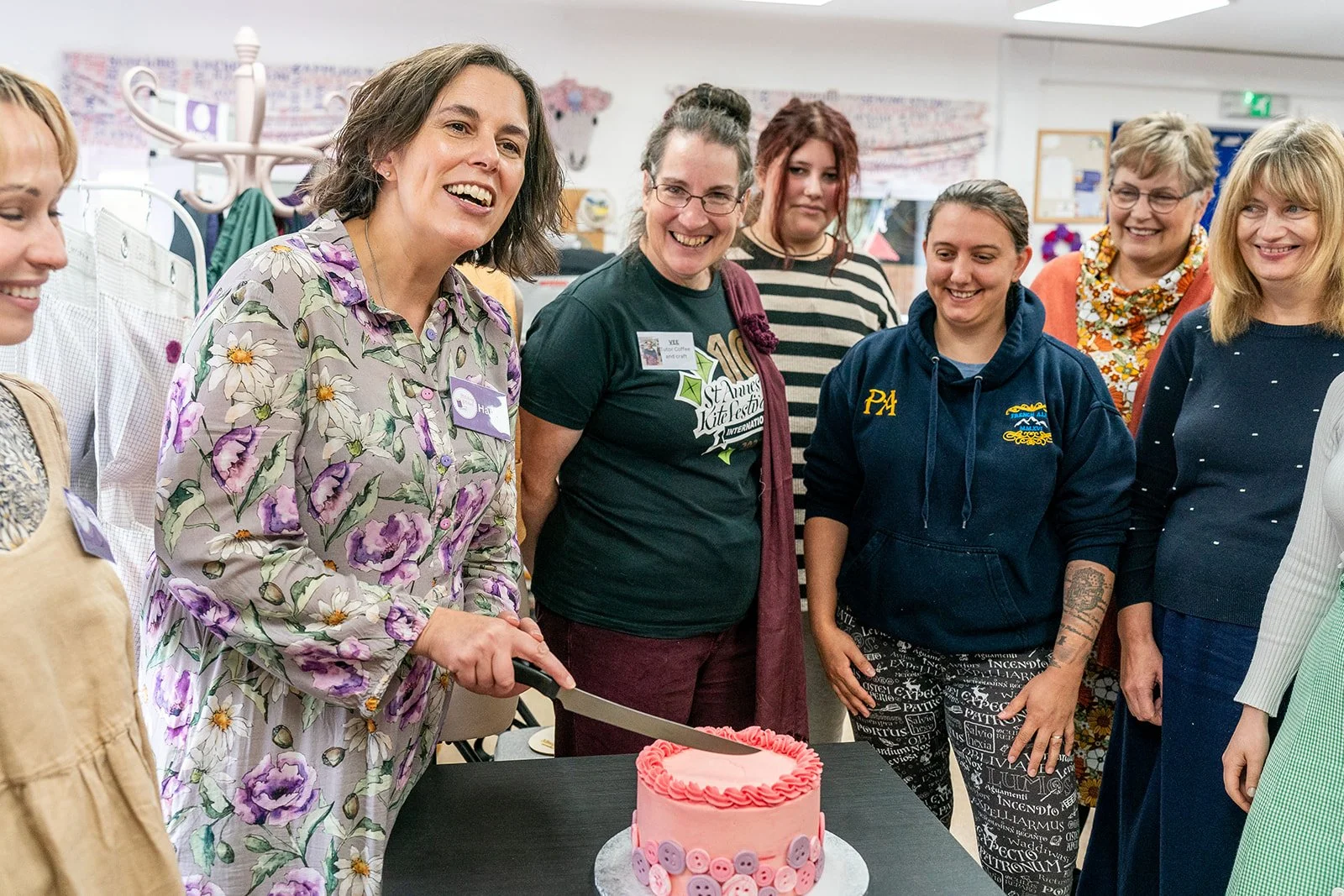
Recently celebrating the 8th anniversary of Stitching Kitchen.
We asked Hannah to share her thoughts on running a textile business sustainably and how she puts those values into practice.
Here are her thoughts, in her own words.
What values are Stitching Kitchen based on?
The whole aim of Stitching Kitchen is to offer a supportive and non-judgmental environment to learn textile based skills in a fun setting. This stems from my experience of getting back into sewing and textile art after mental health issues. The process of making was healing, but so was stitching in company.
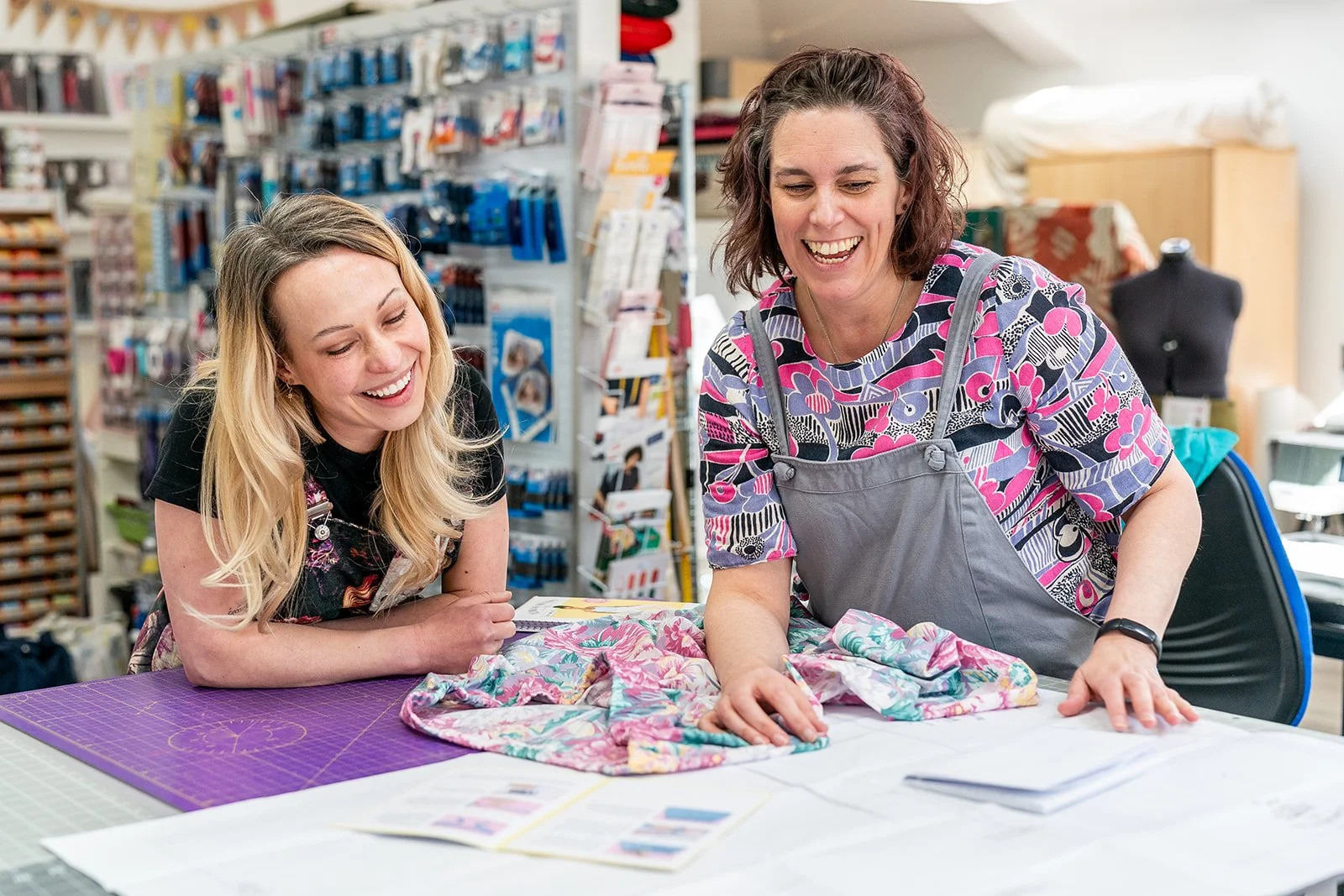
Pyjama workshop at Stitching Kitchen.
While working along side others, you learn from each other. You also hear about other peoples lives and troubles while you sew. That sense of community is what we strive for while offering a great standard of learning, encouragement, equipment and materials.
What does sustainability look like for a small creative business like yours?
Initially, I wanted to reuse and repurpose everything we need at Stitching Kitchen. Unfortunately, the reality of business is that time is money, and often it’s more cost effective to purchase new materials than repurpose old, particularly when sourcing for workshops where multiples or larger quantities are needed.
This has lead to us sourcing from responsible suppliers, supplying quality items rather than throw away, low quality imports. In the shop, we stock UK based brands where possible.
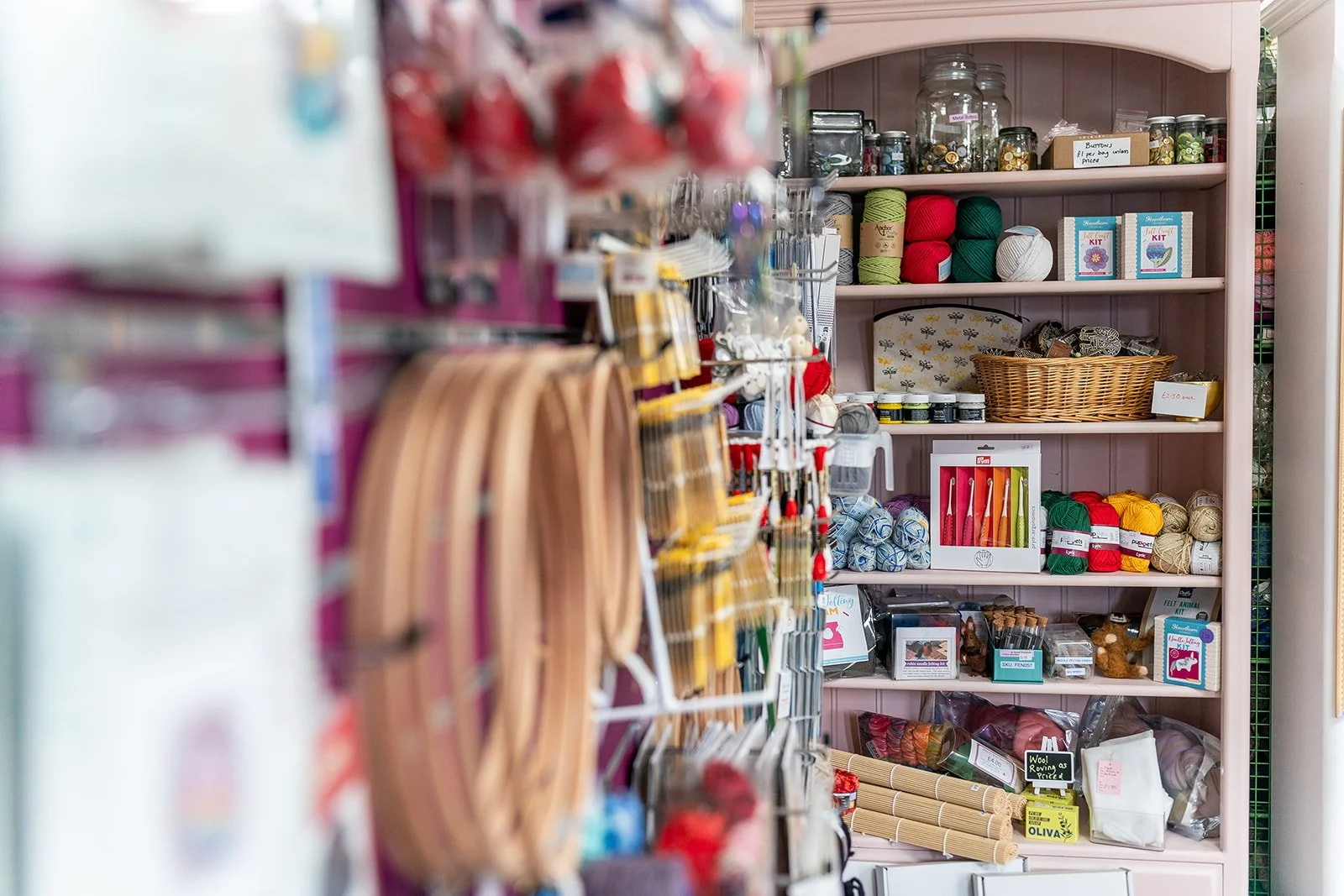
As a retailer I hope we can communicate the stories of the brands that we sell, and make it clear why we champion the products we stock: good quality lasts longer and therefore is more sustainable, and if at a later date you don’t need it can be passed onto another maker.
What are the biggest challenges you've faced in trying to be sustainable?
Although we can use repurposed fabrics in our creative textiles workshops, this isn’t possible for dressmaking workshops. This is because we need to find meterage in the right type and weight of fabric. That is where we encourage new sewists to use non-plastic, natural fibres which are kinder to the environment.
We encourage reuse and try to upcycle our fabric waste as much as possible. Sadly, finding paths to recycling fabrics is currently almost impossible.
At the moment, we are bagging up scraps and passing them to charity textile recycling services, but I would love to do more. All customers are welcome to take scraps if they need to fill a bolster or pouffe!

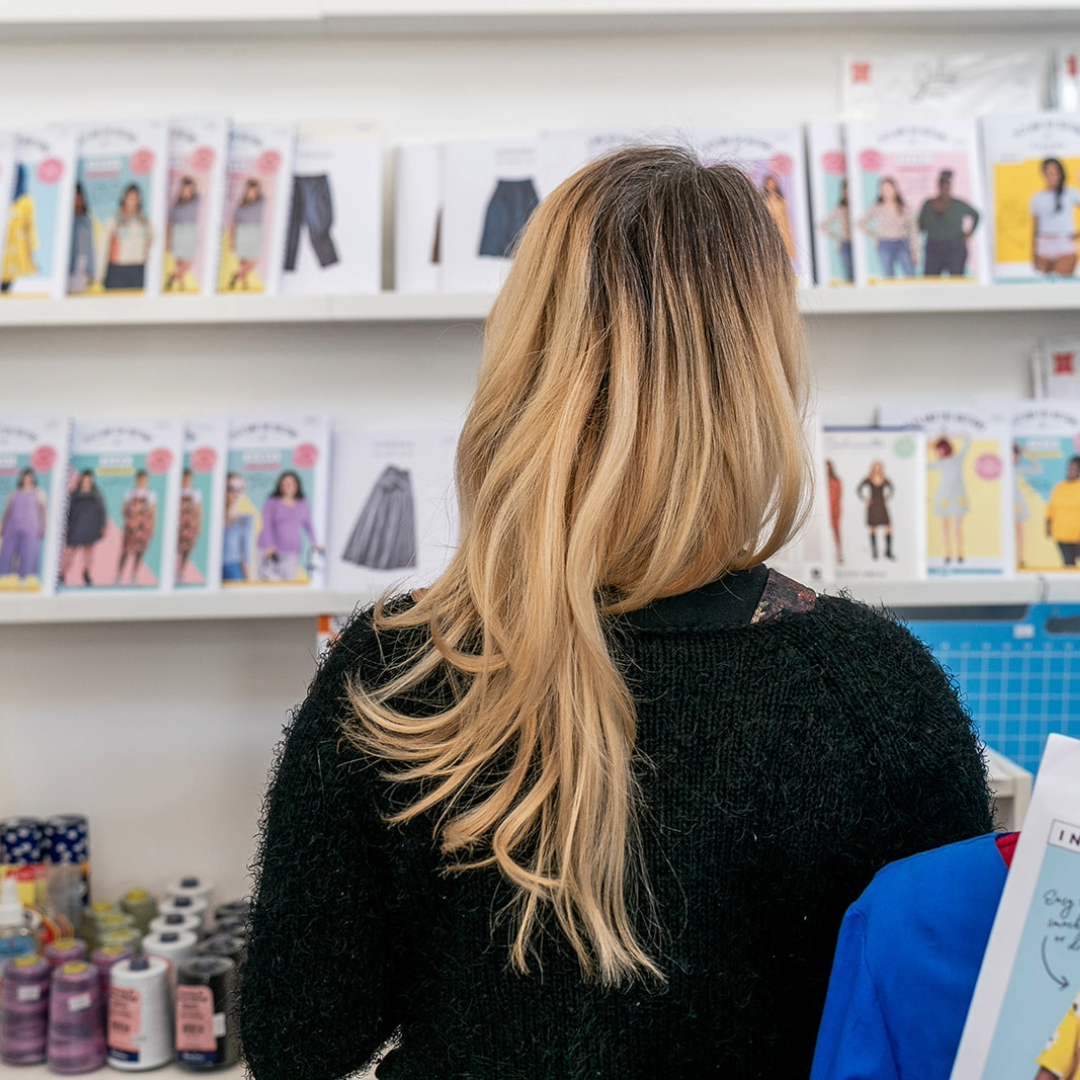
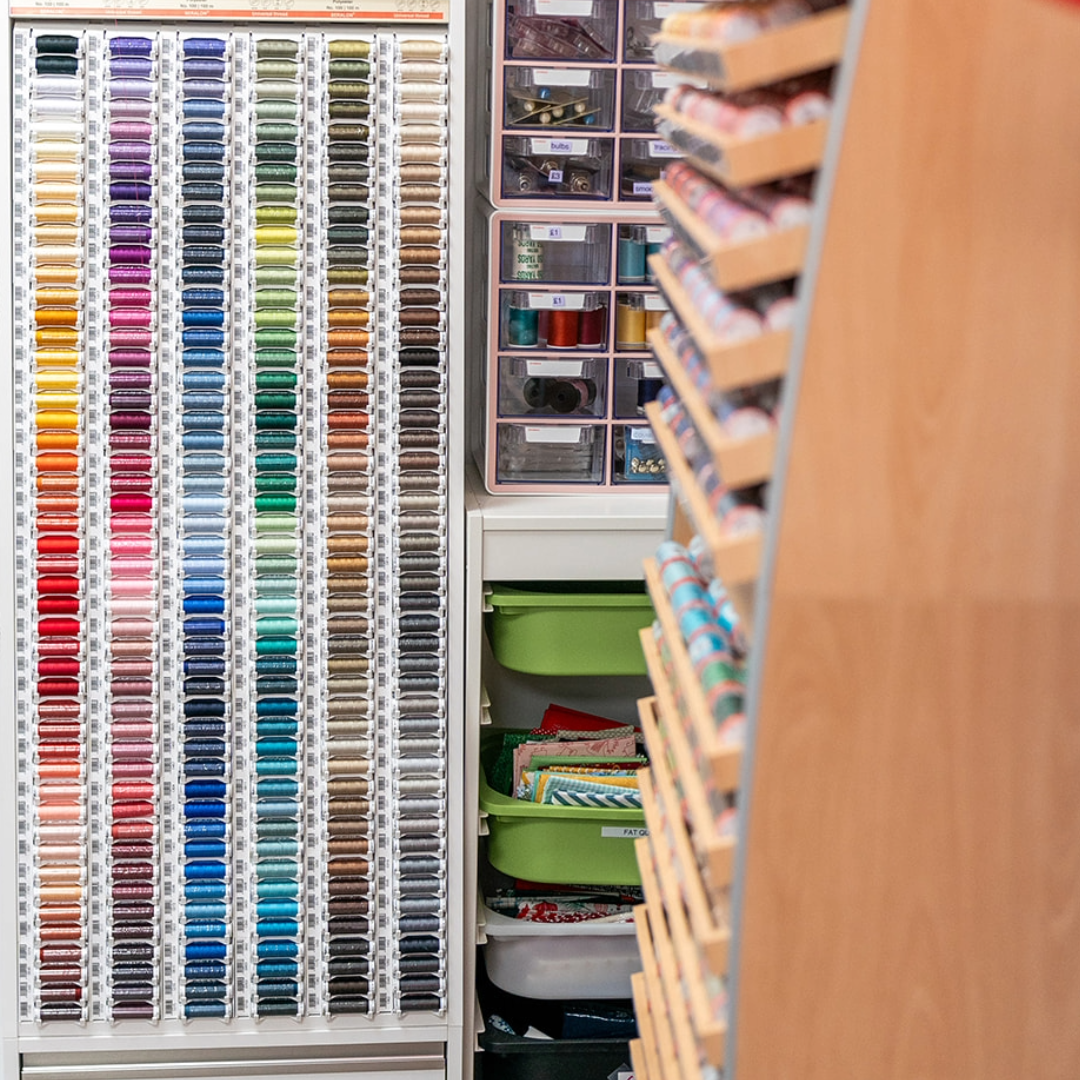
As an education focused business, we’re in a great position to encourage the best sustainable practices in crafting, like considered purchasing, understanding the implications of buying cheapest options (possibly lower quality or plastic fibres), which may not be long lasting and certainly can't be recycled. We also teach our learners to read and interpret patterns so they can pick the right type of materials in the right quantity. And we can teach and support people to mend and extend the life of their makes.
Community seems to be at the heart of what you do. Why is that?
It goes back to the healing power of crafting in community, which helped so much as I rebuilt my life. I have made lasting connections with crafters and sewists who did so much to patch up my life and help me build something solid for my future, my family and the local community.
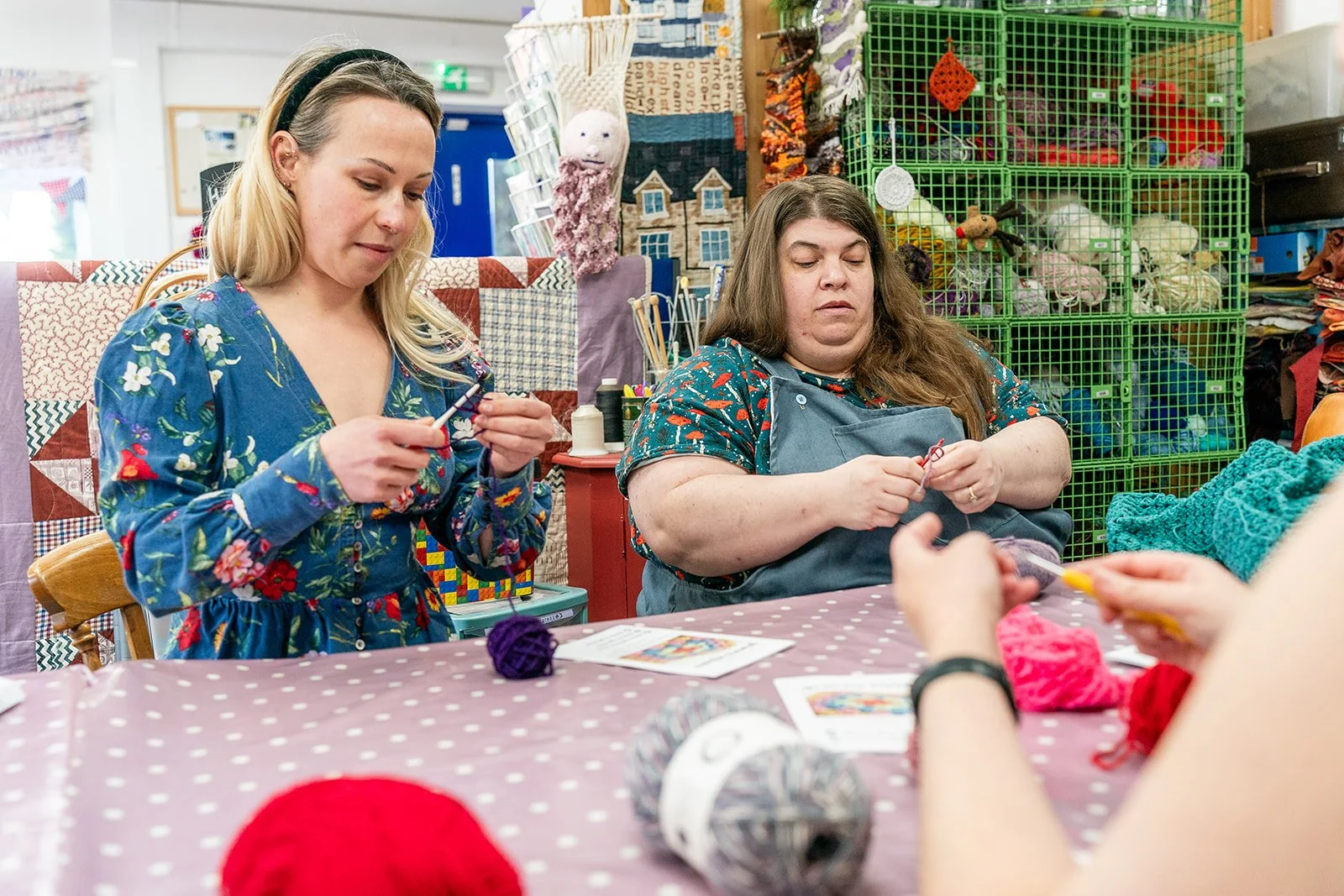
Crochet workshop at Stitching Kitchen.
How has Stitching Kitchen shaped the way you think about creativity and making?
To be honest, I’m now reaching the point of starting to feel a bit left out… our customers have all the fun! I need to make sure I participate in a few of our workshops too.
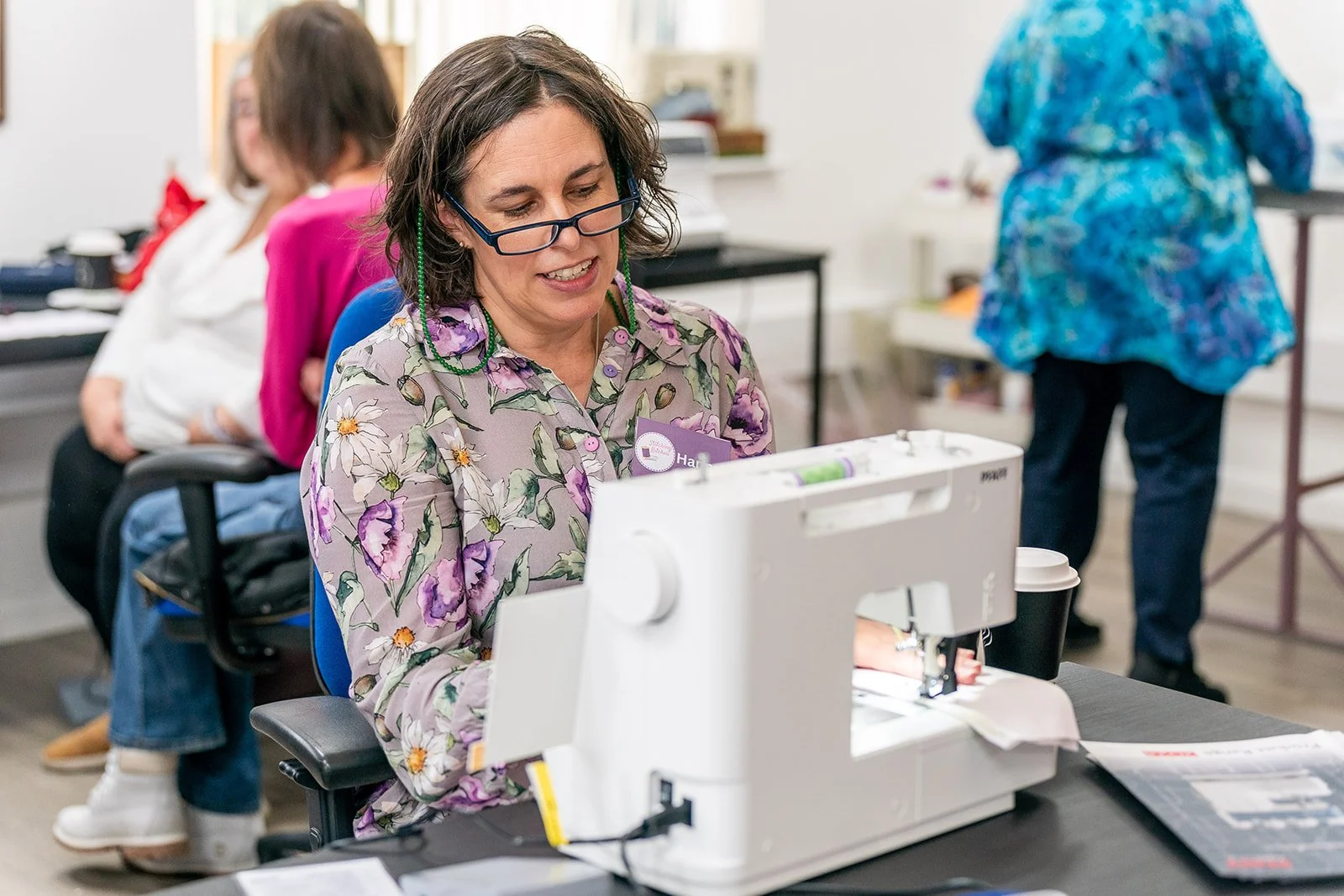
Creativity is still a massive part of how I maintain my mental health, that with moving my body and being outdoors. I struggle, as we all do, with creating balance in my daily life. Making sure stitching is scheduled in each week is vital. Sometimes a client will spark an idea which keeps me on track with my own creativity.
What’s one small habit you’d recommend for making more thoughtfully or sustainably?
This is advice which I have to confess I don’t always follow but: do a test before you cut into the good stuff! Make a toile, knit or crochet a test swatch, check how the fabric and thread work together in a test piece.
Whatever you are making, do a quick test swatch or sample to make sure your precious time and resources will come together into something you’ll love at the end. It will also save you wasting the good stuff with a bad fit, poor tension or a method that isn’t quite right!
