
Mia Filisch: knitting, colour, and community
As our New Year Yarn Destash/Restash at The Catford House fast approaches, we’re thrilled to introduce our collaborator for the event: a knitter whose work weaves together sustainability and an infectious passion for all things fibre. Mia Filisch, founder of Barge Knitters, creates bold, colour-rich pieces that we just can’t take our eyes off.
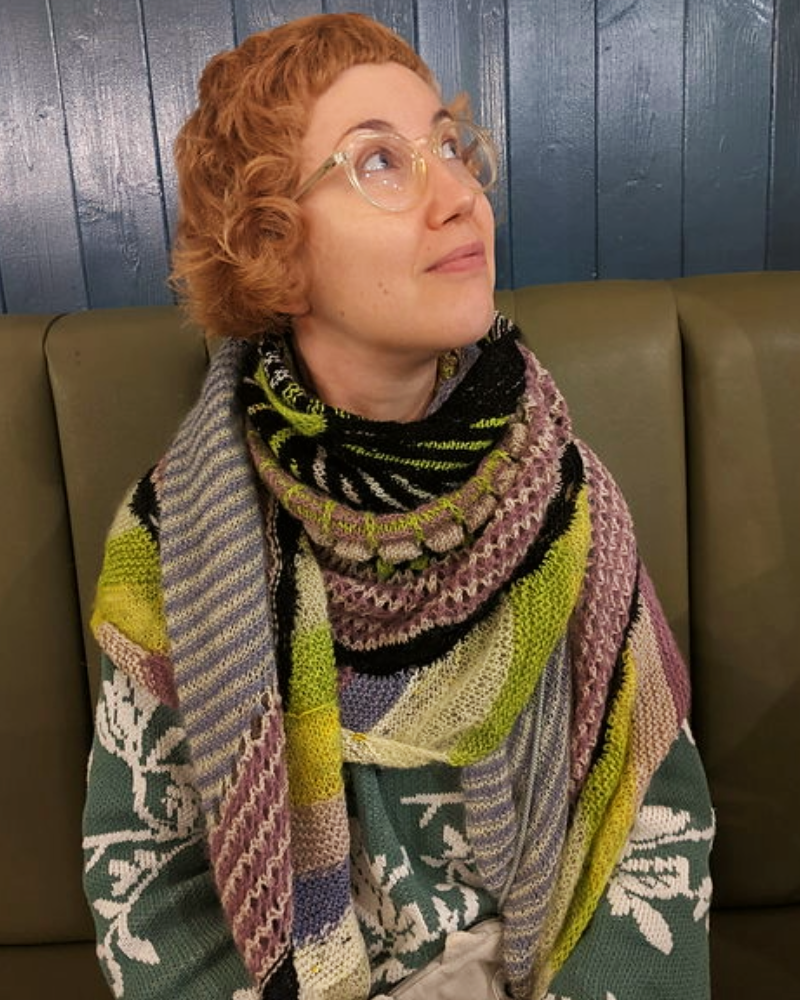
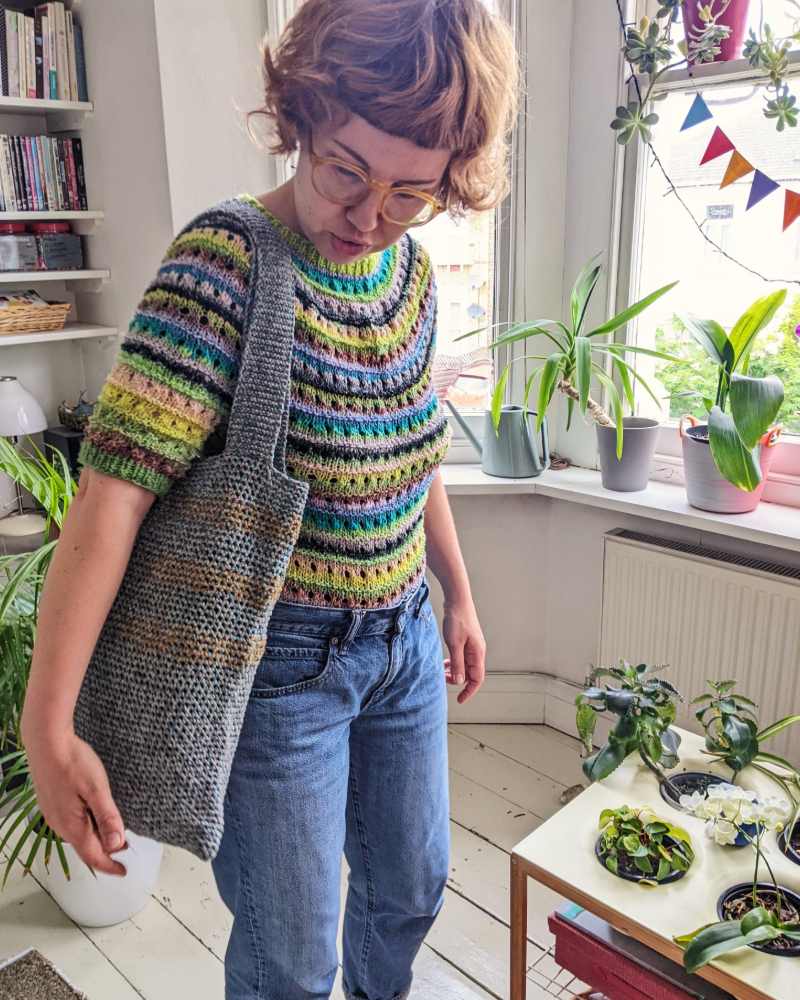
What began as a thrifty student skill has grown into a deeply felt practice fuelled by indie yarns, fearless experimentation, and a genuine love for sharing the magic of knitting with others.
Here is her story, in her own words.
From beginner scarves to a love of knitting
I got my grandma to teach me how to knit when I was in university. To be honest, as a poor student, I think my main motivation was the thought of making things for myself rather than having to buy them… though I didn’t make it far beyond scarves! Then, I forgot about knitting for many years, until I got sucked back into it with a vengeance during Covid. And since then, it’s just stuck.
There’s something about the tactility of working with amazing fibres and colours that I get completely hooked on. I can’t stop going and going, sometimes even to the detriment of getting myself off to bed!
Favourite knitting techniques: colourwork, texture & modern patterns
As someone who’s a sucker for colour work, but who’s never quite gotten into fair isle, I love all other colour techniques: intarsia, marling, mosaic knitting, two-colour brioche, or just experimenting with different ways of ‘landing’ the colour pools of a multi-colour yarn. I also love multi-textural knits that result from using slipped stitches or certain knit-purl repeats.
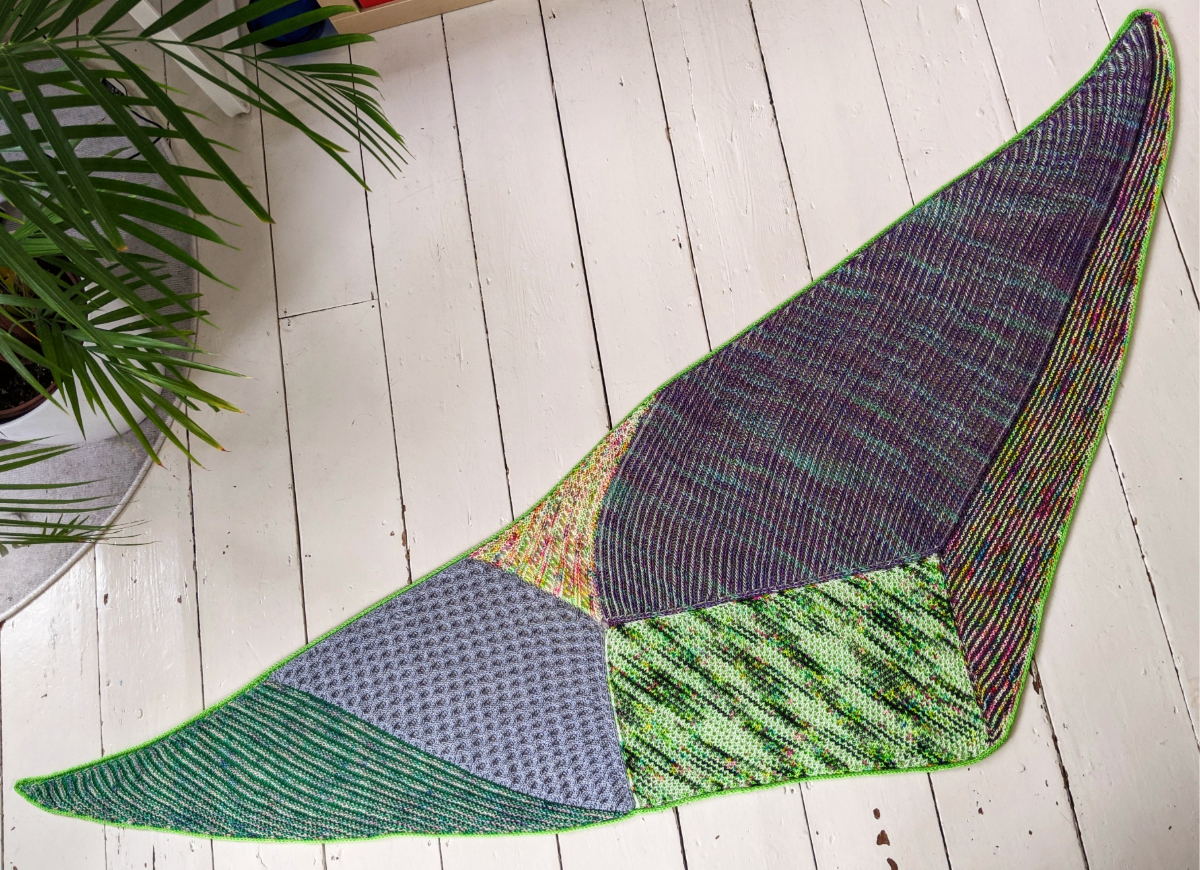
Mia’s make of the Textures Unite Shawl by Westknits.
I have learned so much from some of my favourite pattern designers like Stephen West, Anna Husemann, and James N Watts, whose work I find super inspiring!
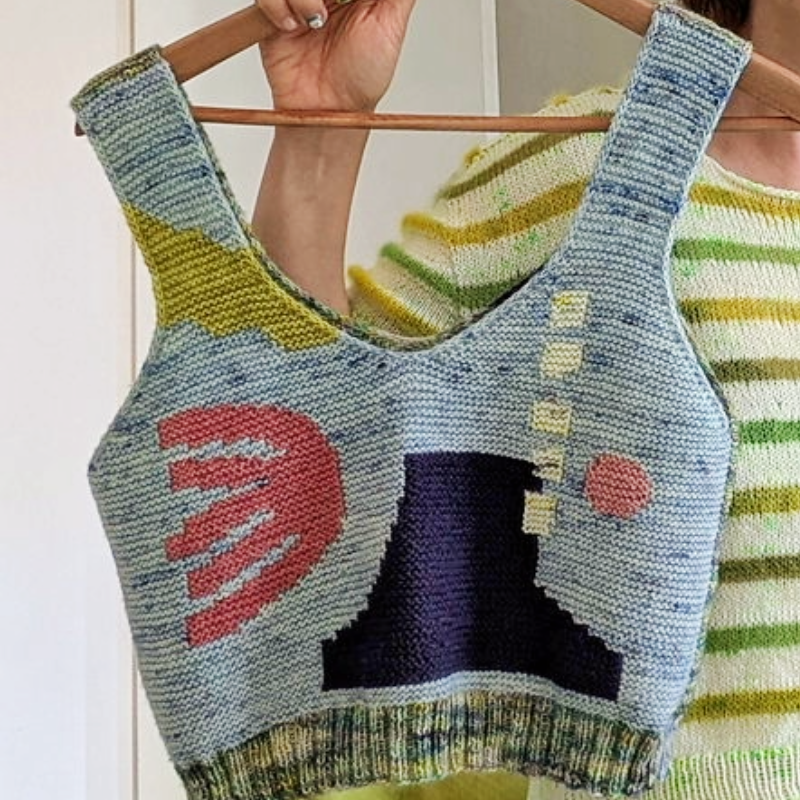
Mia’s make of the Intarsia Top by Anna Husemann.
By following their patterns, and sometimes digging into additional resources on YouTube etc., I'm learning new techniques all the time.
Creative inspiration: indie yarn, colour play & knitting design
I have so much love for indie yarn dyers and my inspiration usually starts from exciting yarns that I find. There are so many fantastic creators, like The Wool Kitchen, Qing Fibre, James Makes Yarn and Weku Yarn.
I just look at their yarn and something weird happens to my nervous system (I think I get flooded with serotonin or something)! Because I end up with lots of odd skeins as a result, I’m particularly attracted to projects where I can play with lots of different colours and fibres, and work with whatever I have in my stash to create something quirky.
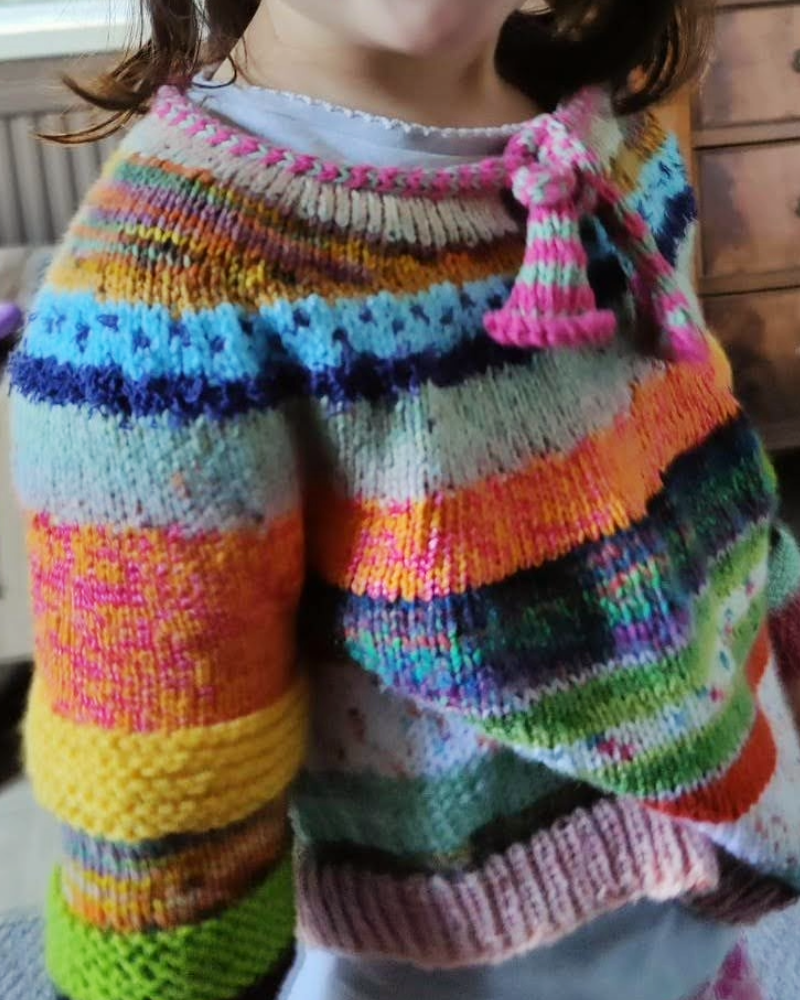
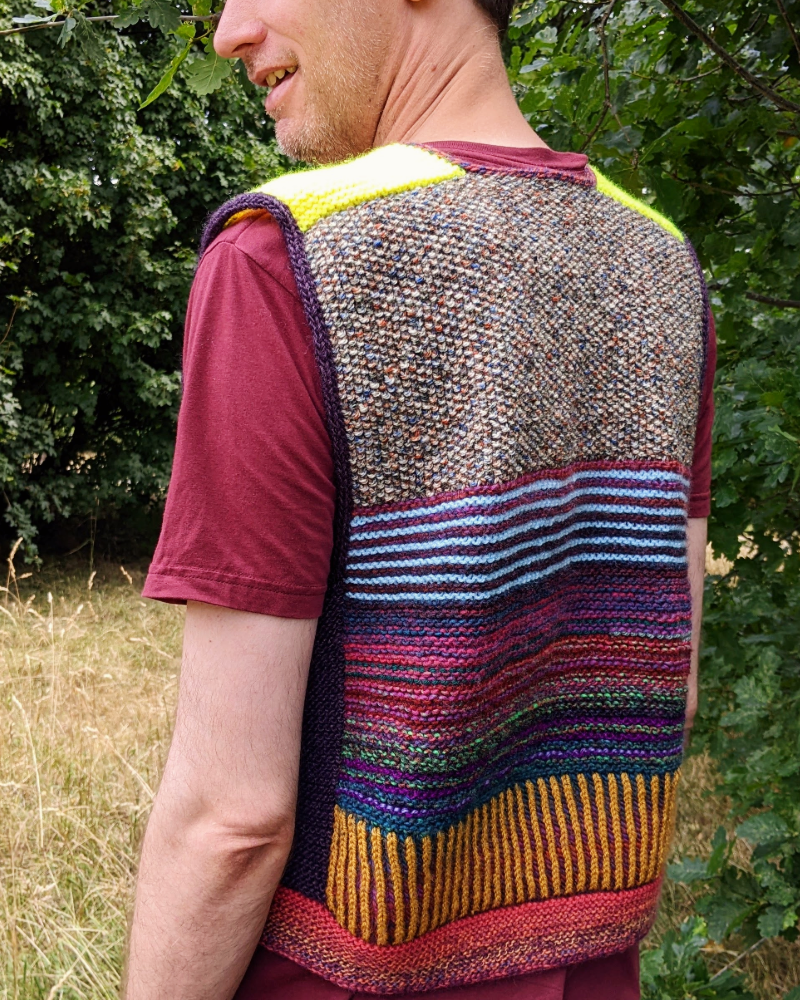
I love picking out a colour palette from my stash for a new project, and then having the basket of the winning skeins sit next to me whilst I work my way through the pattern. But sometimes colour combinations don’t quite work out like I had in mind. I’ve definitely unraveled and reknit areas of a shawl or garment a few times, until I was happy with how the colour fitted with the rest.
I also get excited by things I’ve learnt from a pattern that then give me other ideas to try in a free-style follow up project. This can be a particular technique, or even a new approach to constructing the overall shape of a garment.
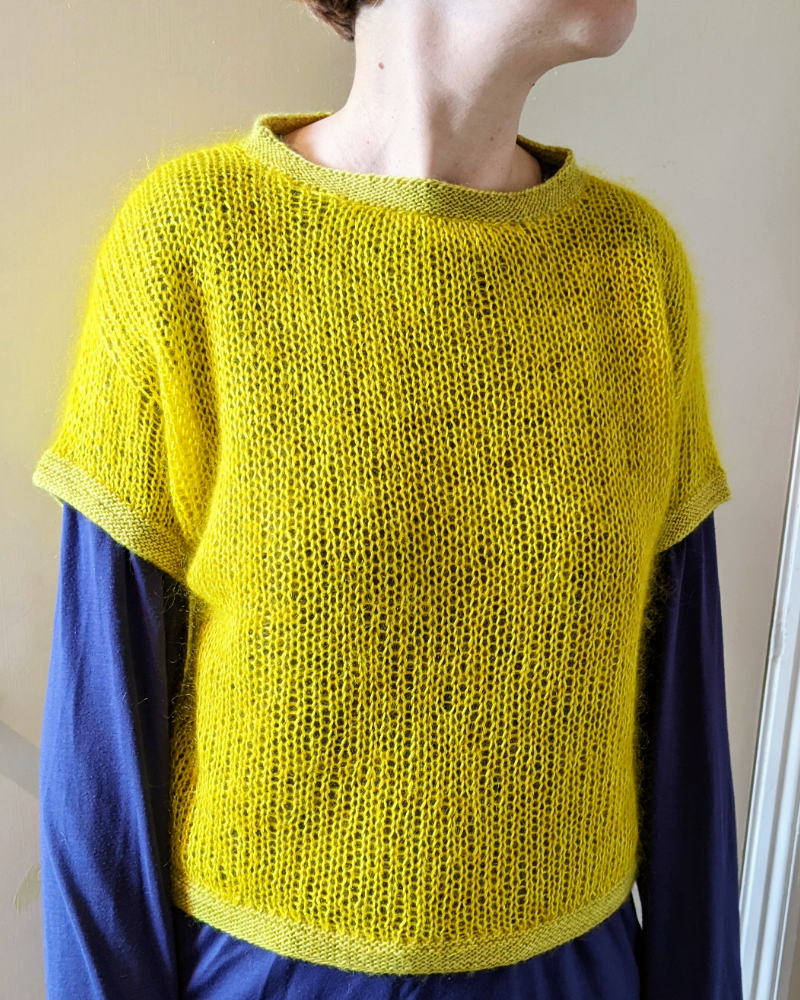
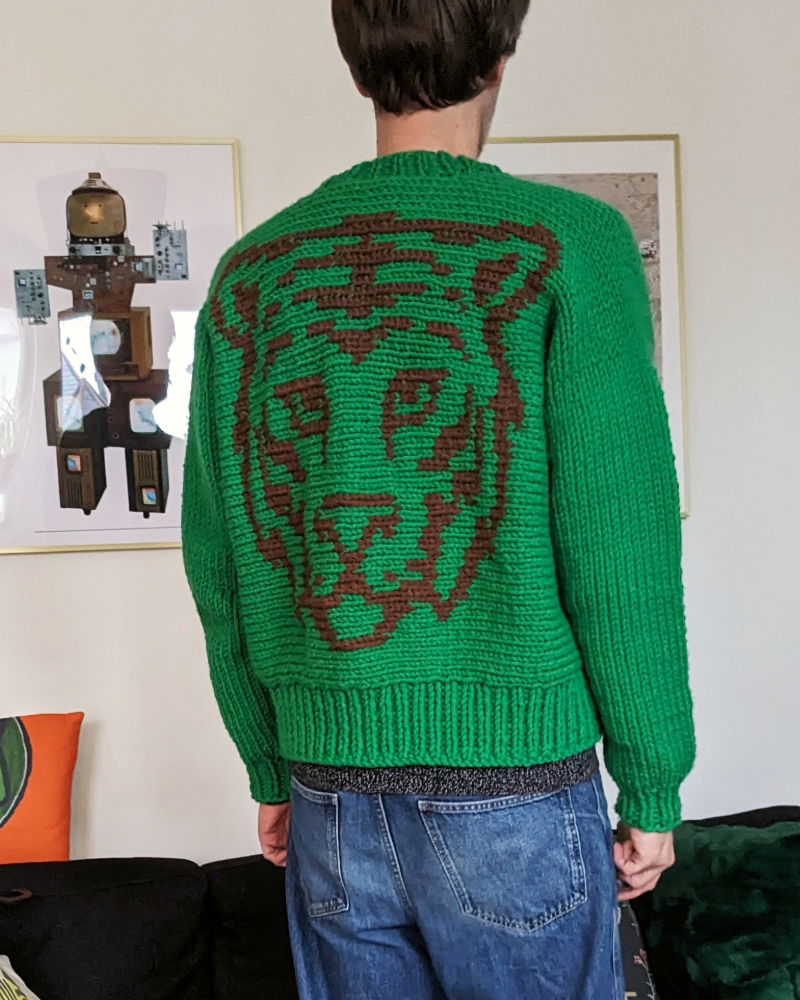
I've enjoyed immersing myself in the thought process of knitting design. So much so, that I've ended up testing patterns for a few different designers. I’ve also been working on a few patterns of my own, like my Crayon Balaclava.
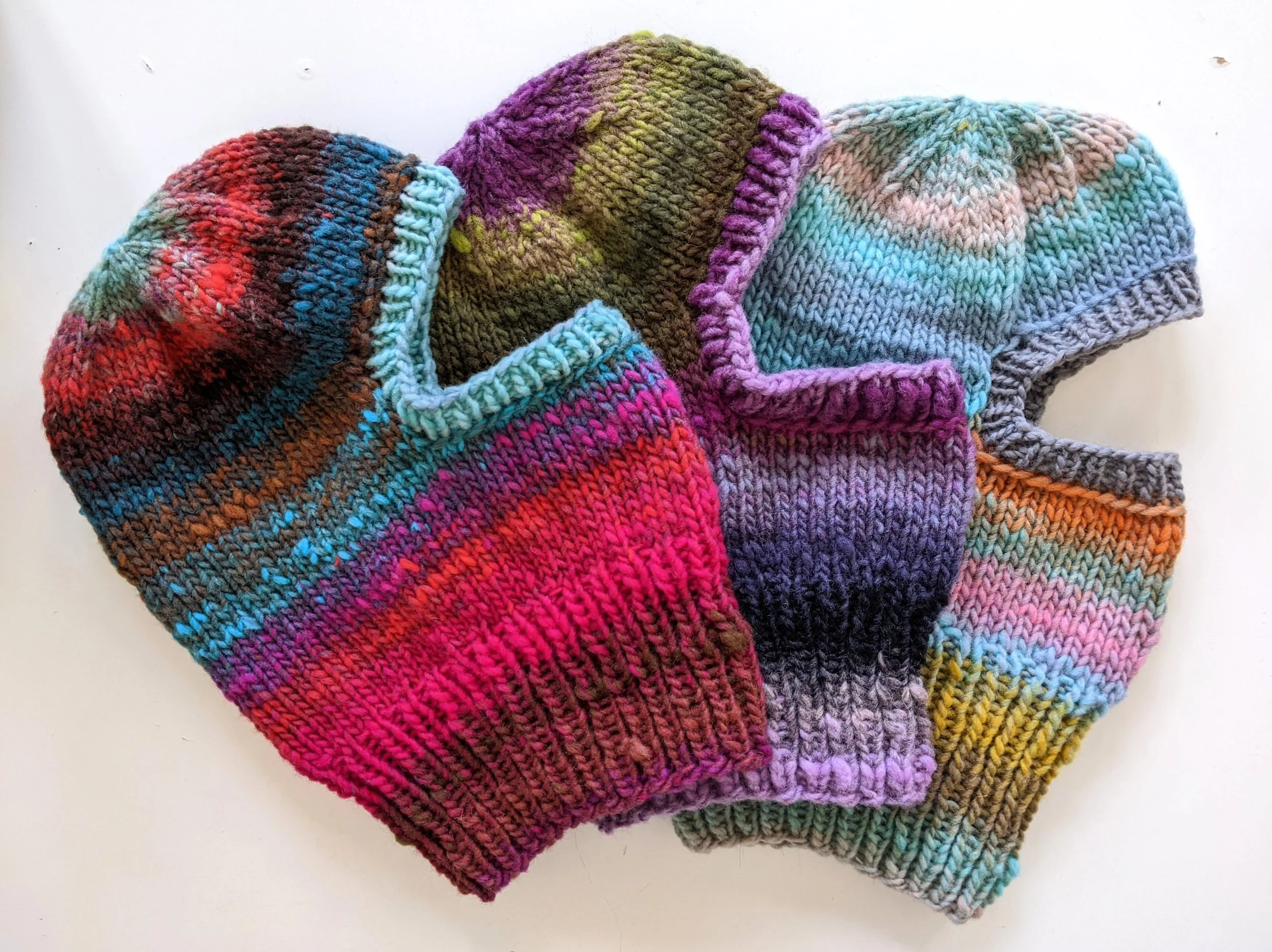
Building a knitting community: from solo craft to Barge Knitters
When I knit, I’m definitely in my safe space. It’s my decompression activity, but I’m also constantly excited by it.
At one point, I was desperate to have people to chat to — others who could relate to both the knitting euphoria as well as the knitting pits of despair (like when I accidentally shrunk a sweater in a wash beyond rescue right after finishing it).
So, as a way to meet people, I advertised ‘free knitting lessons’ on a neighbourhood sharing app. I found two lovely ladies who soon after turned into the founding members of Barge Knitters! Over time, a few more people joined, but it’s still a tiny group that’s quite close-knit (no pun intended).
Knitting for charity: supporting Dementia UK through craft
My partner’s dad had vascular dementia, and we saw his mum having to level with incredible challenges as his full-time carer for several years. Since his passing, she supports other couples and families affected by dementia. I have a huge admiration for her dedication.
So, when my employer picked Dementia UK as our charity of the year and committed to doubling any donations raised by employees, it was a no-brainer to join their initiative with my own fundraising challenge.
To generate donations, I started by putting some of my existing knits up for sale. I then explored selling at local craft markets, which has been a completely new and fun experience! Coming up with small knits that work at a low price point has given me loads more ideas to play around with. It’s still in early stages, but I’m hoping to continue knitting for charity over the next year.
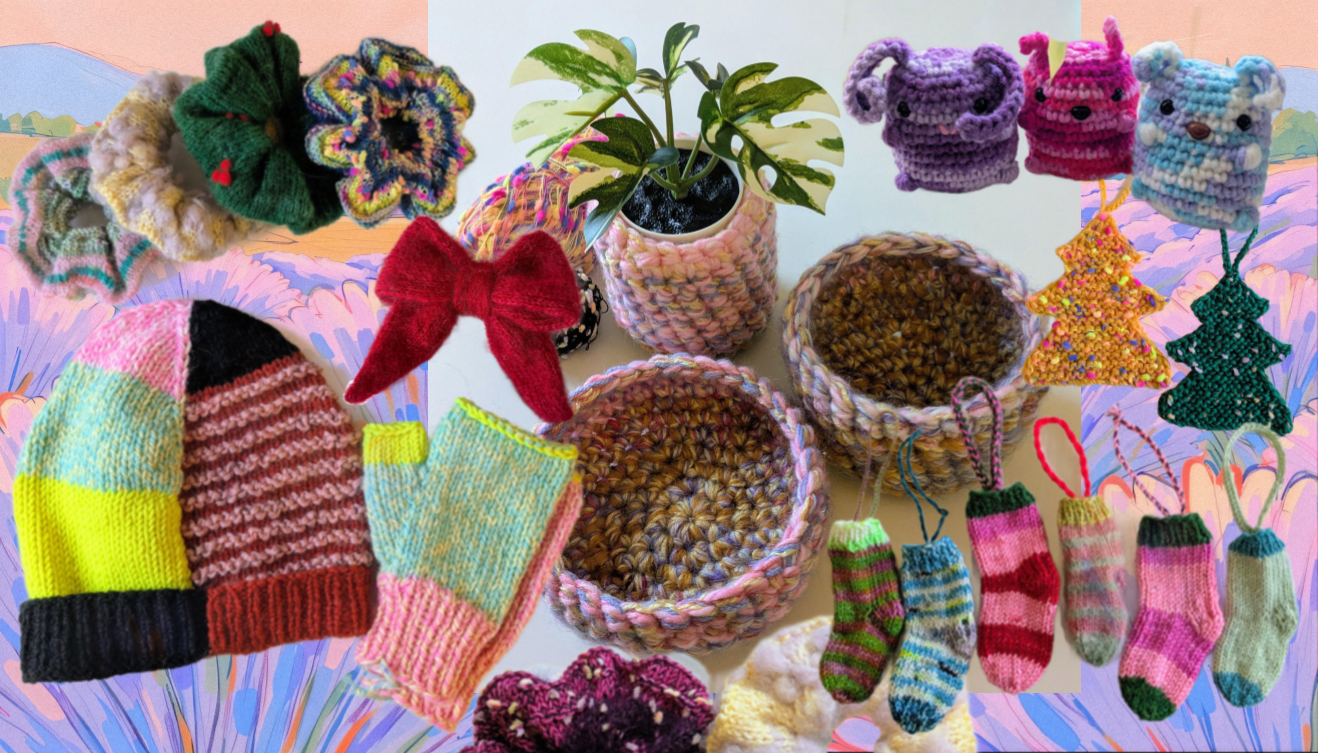
Items from Mia up for grabs at a recent market.
I’ve also started taking knitwear-related commissions in exchange for a donation. For example, I made a custom jumper for a friend, and mended another friend’s beloved jumper that was heavily afflicted by moths!
Sustainable knitting: natural fibres, ethical yarn & conscious making
I strongly favour natural fibres, not just because they’ll decompose (unlike acrylic or polyester), but also because they make higher quality items that feel very different to wear. My hope is that people are more likely to treasure them, rather than treat them as a disposable commodity.

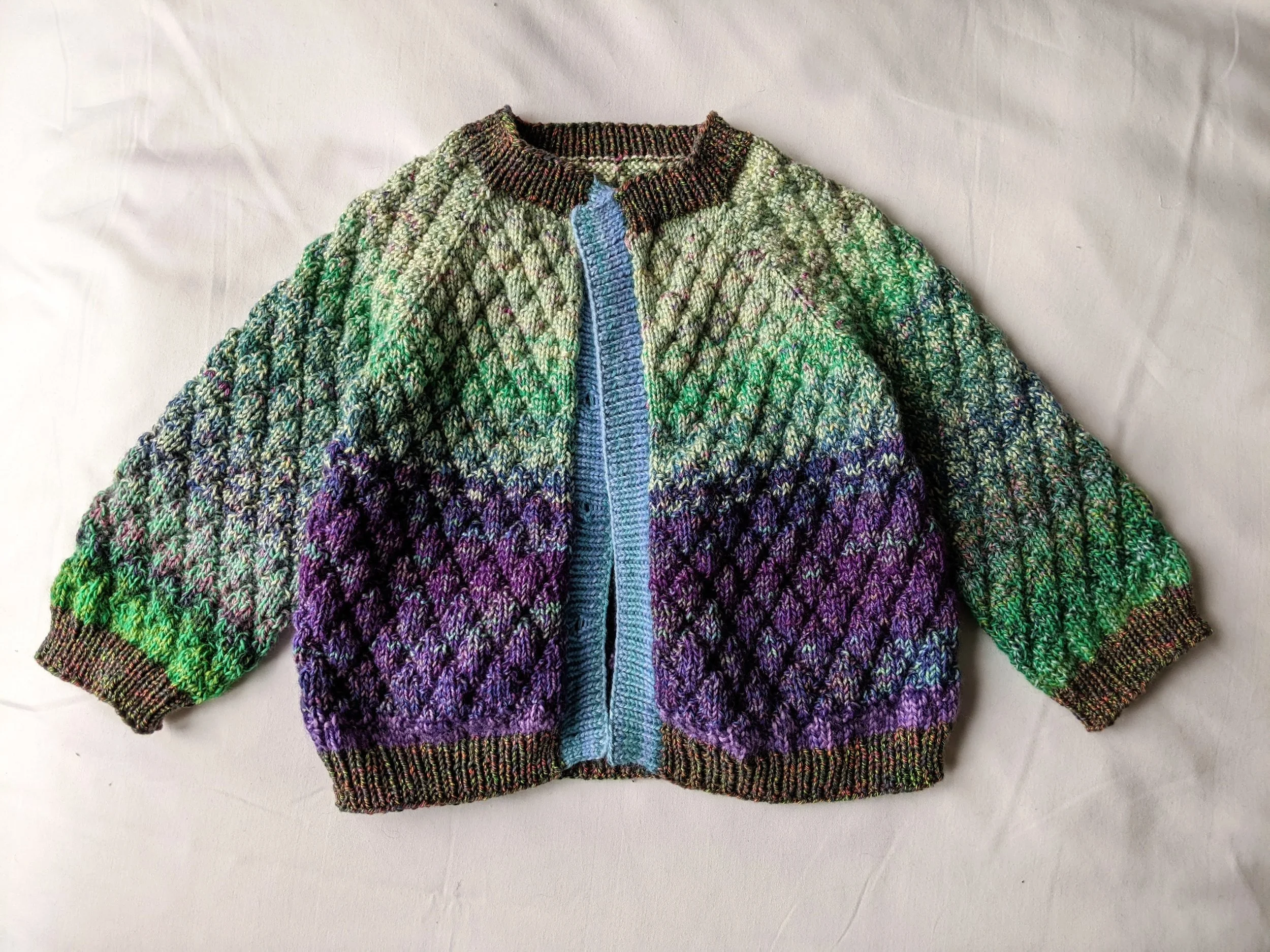
Buying yarn from indie dyers doesn’t just mean I’m supporting a small creative business. This yarn also tends to have shorter supply chains. As an important aspect of sheep welfare, I also look for mulesing-free yarn.
However, in all honesty, all this has clashed with my recent need to make affordable market items for my fundraising, and to answer people’s need for durable items that can survive the washing machine! So, my current compromise is using discarded or donated synthetic yarn where necessary, and trying to make things that people will love and use for many many years to come.
Why the New Year Yarn Destash/Restash
The goal of organising a yarn swap in my community is to reduce waste and spark joy by giving folks a way to trade items that are weighing them down for fresh-start pieces with a better chance of being used.
I also want to raise funds for a great charity and foster connections among local crafters, exploring what might come from these new relationships.
Follow Mia on Instagram and check out Barge Knitters.
Know someone working with materials in exciting, sustainable ways and/or making a difference in their community through craft? We’d love to feature their story. Get in touch at hello@destasher.co.uk.
